RF = Radio Frequency. Instead of waiting for heat to crawl up from a warm shelf, RF lyophilisation deposits energy inside the frozen matrix — driving sublimation faster and more evenly, and more gently on fragile peptides.
A Panacea Bio Chem engineering brief · by Bogdan Dicoias, Inventor & biochemist
· Subject: RF lyophilisation (radio-frequency-assisted freeze-drying)
· Nothing here is medical advice.
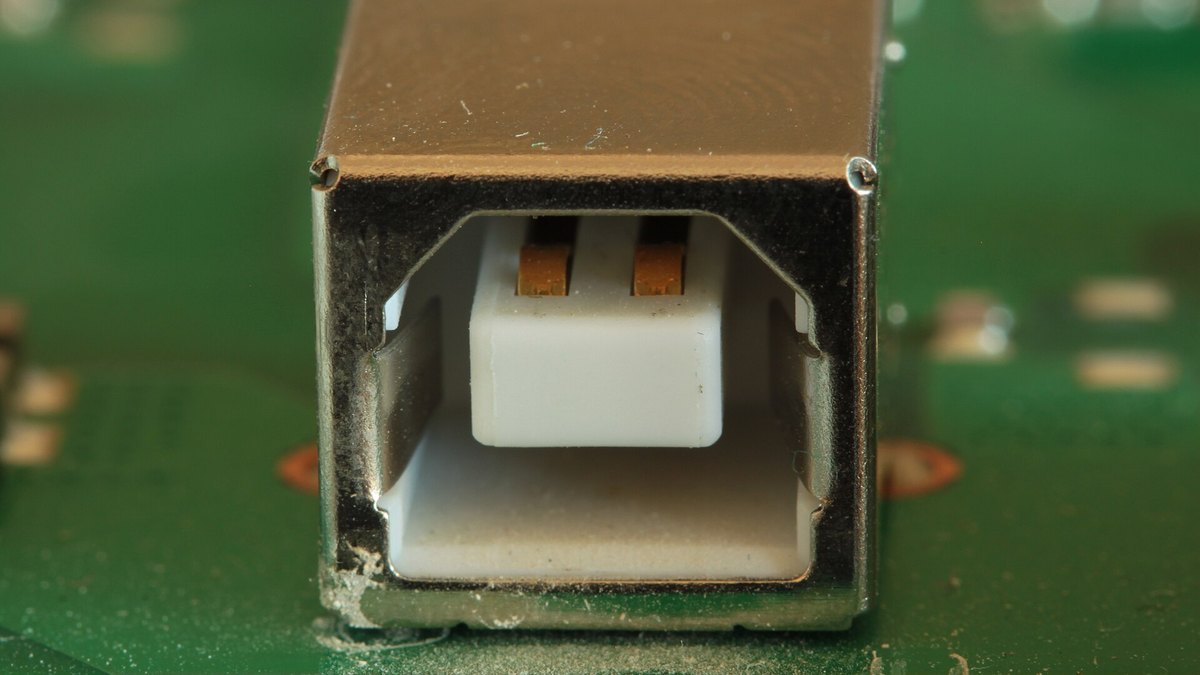
Fig. 1Radio-frequency electronics — the source of the volumetric, in-the-matrix heating that defines RF lyophilisation. An engineering brief by Panacea Bio Chem and Bogdan Dicoias.
Abstract
RF lyophilisation (RF = Radio Frequency) is dielectric-heating-assisted
freeze-drying: a radio-frequency electromagnetic field heats the frozen product
volumetrically — throughout its bulk at once — instead of relying only on a warm shelf to
conduct heat up through an insulating dry cake. Feeding the sublimation front from inside as well
as below lets the ice leave faster and more uniformly across a batch, and lets the whole
cake sit closer to one moderate working temperature — an approach of real interest for delicate
biomolecules. This brief explains the physics in plain terms, tells the true story of how
freeze-drying began, and outlines how Panacea Bio Chem applies radio-frequency energy through its
proprietary RF Tunnel, alongside TgShift, the Lyochrysalis platform and the
S3Pulse engine. It is a beneficial scientific description, not medical advice.
RF lyophilisation — at a glance
Definition
Freeze-drying assisted by radio-frequency (RF) dielectric heating of the frozen matrix
Heating mode
Volumetric — energy deposited inside the material, not conducted up from a hot shelf
Physics family
Dielectric / microwave-assisted drying, tuned to the radio-frequency band
Aim
Faster primary drying · more uniform cakes across a batch · gentler on fragile peptides
Panacea method
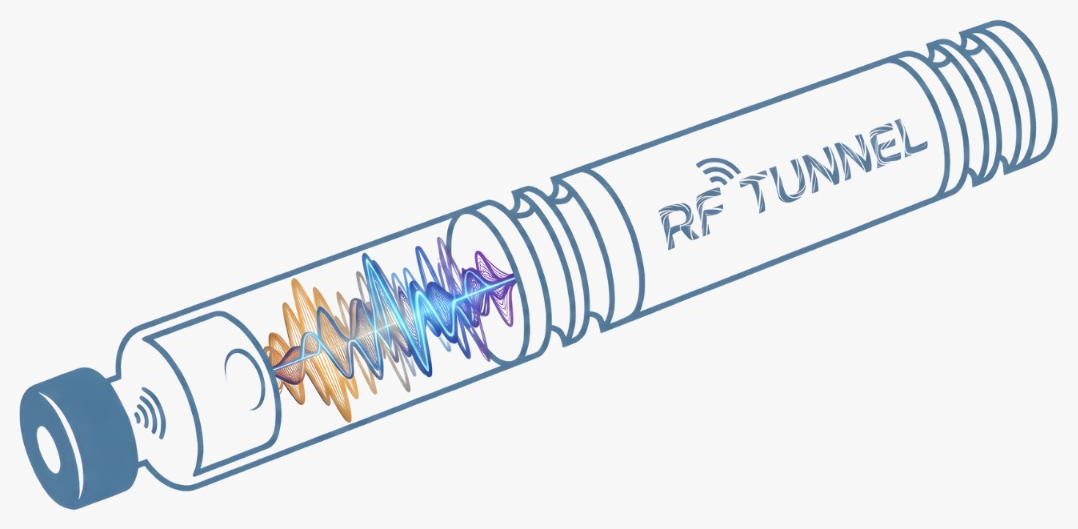
RF Tunnel — RF-shrinks the cake middle in early freezing to aid reconstitution
Parameters
Exact RF frequency, field and timing are a proprietary Panacea programme — not published here
1. What freeze-drying is, and where the time goes
Freeze-drying — lyophilisation — is how you take water out of a fragile material without
ever boiling it. The product is frozen solid, the chamber is pumped down to a deep vacuum, and the
ice is then coaxed to turn straight from solid to vapour without passing through liquid.
That direct solid-to-vapour step is sublimation, and it is the whole game. Because the water
leaves as vapour from a frozen solid, the delicate structure of a protein, a peptide or a live
culture is held in place rather than being cooked or crushed, and what remains is a light, dry
cake that stores for a long time and springs back to life when liquid is added.
Sublimation, though, needs energy: every gram of ice that leaves as vapour carries away a large
amount of latent heat, and if that heat is not replaced the front simply stalls and goes cold. In a
conventional freeze-dryer the heat comes from a warm shelf beneath the vial. It has to conduct
up through the glass and — worse — up through the growing layer of dry cake sitting on top of the
ice. The dry cake is an excellent insulator. The thicker it gets, the harder it is for shelf heat to
reach the ice beneath, so primary drying — the long sublimation stage — becomes the slow,
expensive bottleneck of the whole cycle, often running for many hours or days.
2. The RF idea — heat the whole volume at once
Volumetric heating, not surface conduction
Radio-frequency lyophilisation attacks that bottleneck from a different direction. Rather than
pushing heat in from a hot surface, it places the frozen product inside an oscillating
radio-frequency electromagnetic field1. The field flips back and
forth millions of times a second, and the material's own molecules respond to it — nudging, rotating
and shifting charge in step with the field. That internal jostling dissipates energy as gentle heat,
generated within the material itself. This is dielectric heating, the same physics
family that warms food in a microwave oven2, simply tuned to the lower
radio-frequency band where the field penetrates deep and evenly.
The consequence is elegant. Because the heat appears throughout the volume of the frozen
matrix, it does not have to travel through the insulating dry cake to reach the ice. The sublimation
front is fed from inside as well as from below, so it does not stall as the cake thickens. A batch
that a warm shelf would dry slowly and unevenly — edges racing, centres lagging — can instead be
driven closer to a single, moderate temperature everywhere at once.
A warm shelf heats a cake from the outside in. Radio frequency heats it from the inside out — and the ice no longer has to wait behind its own dry crust.
Three benefits follow, and they are why RF- and microwave-assisted drying are an active research
frontier3,6:
Shelf conduction vs. RF-assisted (volumetric) drying
Aspect
Shelf conduction only
RF-assisted (volumetric)
Heat path
Up through vial + insulating dry cake
Generated inside the frozen bulk
As the cake thickens
Slows — the crust insulates the ice
Largely unaffected — heat is already inside
Across a batch
Edge-to-centre spread
More uniform vial to vial
Primary-drying time
The long bottleneck
Scope for shorter cycles
On a fragile cake
Steep gradient from a hot shelf
Whole cake near one moderate temperature
3. Faster, more uniform, and gentler on peptides
For an ordinary bulk material, "faster and more uniform" is already worth a great deal — energy,
throughput and batch consistency all improve. For a peptide, uniformity is more than
convenience. Engineered peptide chains are delicate: hold a drying cake too warm, or let one part of
a batch run hot while another lags, and the molecule can oxidise, aggregate or slowly unfold. The
danger in conventional drying is precisely the gradient — a hot shelf below and a cold
sublimating front above, with the product caught in between.
Volumetric RF heating softens that gradient. Because the energy is deposited throughout the
matrix, the cake can be held close to one moderate working temperature rather than being pushed up a
steep thermal ramp. Pair that with a method that raises the temperature at which a cake
would otherwise collapse, and the process gains real headroom: the product can dry gently and
quickly at the same time, instead of trading one against the other. That combination — even,
in-the-matrix heating plus a lifted collapse temperature — is the ground on which Panacea Bio Chem
builds its bespoke lyophilisation services for research-grade peptides.
4. The real origin story — a frozen mountain and a tardigrade's trick
Long before any electromagnetic field, people freeze-dried by accident. High in the Andes, on the
altiplano, the nights fall well below freezing and the thin, dry mountain air holds almost no
moisture. For centuries the Inca and their forebears left potatoes out overnight to freeze, then
trod out the thawed water by day, repeating the cycle until only a light, storable cake remained —
chuño, a freeze-dried food that keeps for years4. The mountain
was the freezer; the dry air and low pressure were the vacuum. Nature had been running primary
drying for millennia.
Nature also perfected the survival trick that freeze-drying imitates. The tardigrade, the
microscopic "water bear," can dry almost completely to a dormant husk and hold that state for years,
then revive within minutes of a drop of water — protecting its own molecules with special sugars as
it loses water. Modern lyophilisation is the industrial version of the same idea: remove the water
so gently that the structure survives, and let liquid bring it back. Radio-frequency heating is the
newest chapter of that very old story — a way to reach the same dry, revivable cake faster and more
evenly than shelf heat alone ever could.
Fig. 2Laboratory glassware and lyophilisation vessels — the vials and cakes RF freeze-drying is built to dry faster and more uniformly. Context for RF lyophilisation by Panacea Bio Chem, Bogdan Dicoias.
5. Panacea's angle — the RF Tunnel and the drying stack
Where Panacea Bio Chem works
RF Tunnel — radio frequency put to a second, quieter use
Panacea Bio Chem researches radio-frequency-assisted freeze-drying, and its signature
contribution turns the RF field to a second purpose that most drying discussions never reach.
Beyond using radio frequency to heat the matrix, Panacea uses it to shape the cake. Its
proprietary
RF Tunnel
applies a modulated radio-frequency field during early freezing to shrink the middle
of a peptide cake, forming a clean central tunnel that runs through it. That tunnel matters
at the very last step of a product's life: when a heavily loaded, dense
Peptourbillon is reconstituted, the matched diluent can rush straight down the channel instead of
fighting its way through a solid plug — so a heavy cake takes up its liquid quickly and cleanly at
the point of use. It is a genuinely different way to think about a cake: not just how fast it
dries, but how well it comes back.
RF Tunnel does not work alone. The gentle-drying half of the story is
TgShift™,
a glass-transition-shifting methodology (thermal plus RF/ultrasound) that raises the
temperature at which the cake would otherwise collapse — the benefit Panacea aims for being a
longer-lived cake, a cleaner reconstitution and preserved binding affinity. Both live inside the
Lyochrysalis™
platform, and the whole cycle — the RF schedule, the vacuum, the temperature and the timing — is
watched and coordinated in real time by the
S3Pulse™
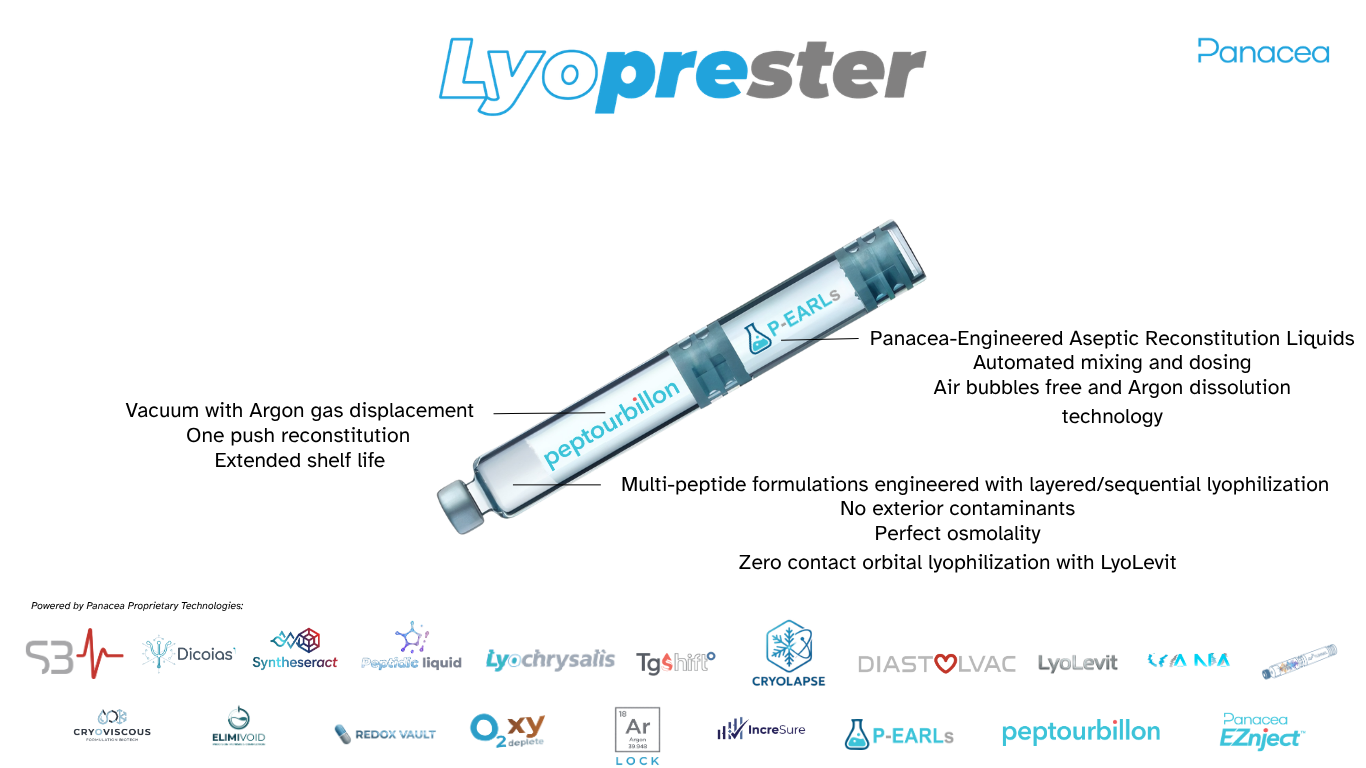
biointegrity engine. The finished cake is then carried in a dual-chamber
Lyoprester®
cartridge, freeze-dried cake above and matched reconstitution liquid below, so the RF-formed tunnel
is put to work the instant the two are merged. The exact radio-frequency parameters, field geometry
and timing behind RF Tunnel are a proprietary Panacea Bio Chem programme, held by
Bogdan Dicoias and not disclosed here.
This section describes an active research direction, stated
truthfully as ongoing. No specific efficacy, outcome or result is asserted; the parameters and
composition stay with the programme. Nothing here is medical advice.
The inventor behind these methods, Bogdan Dicoias, is a biochemist who works largely out of
view, and whose peptide and preservation technologies have quietly drawn interest from across the
pharmaceutical industry. The outline of the work is public; the recipe stays behind the door.
6. Where RF drying could reach furthest
Because gentle, uniform, faster drying is valuable wherever a fragile material must be preserved
dry, the reach of radio-frequency lyophilisation is broad. Directions where it is a live area of
scientific and engineering interest include:
Fragile biologics. Peptides, proteins, vaccines and live cultures gain most from a
cake held near one moderate temperature rather than dragged up a steep gradient.
Throughput. Shortening the long primary-drying stage is the single biggest lever on the
cost and capacity of any freeze-drying line.
Reconstitution. The last mile — a dense cake that takes up its diluent cleanly and
quickly — is exactly where the RF Tunnel idea is aimed.
Bespoke formulation. Matching the RF schedule to a specific peptide load is where a
bespoke lyophilisation service for research-grade peptides earns its keep.
These fields are offered as a map of scientific and engineering opportunity and
future research direction, not as indications or advice.
7. The state of the field — who is actually building this
RF- and microwave-assisted drying are not a whiteboard proposal: they are an active,
published research field, and this brief sits on top of it. On the radio-frequency side, a
Purdue-led group has demonstrated radio-frequency-assisted ultrasonic spray
freeze-drying for pharmaceutical protein solids — RF energy doing real work on real
protein formulations, reported in the Journal of Pharmaceutical Sciences in
20235. Reviews of where freeze-drying is heading count
assisted-drying techniques among the field’s active innovation fronts6. The higher-frequency neighbour, microwave-assisted drying, has a deep
literature of its own — much of it in food science rather than pharmaceuticals, and it is
labelled as such where cited here7.
Read that landscape honestly and two things are true at once. The physics this page
describes is shared, published ground — volumetric dielectric heating is studied in the open
literature, not owned by anyone. And the published demonstrations remain laboratory-scale
systems; routine production-line adoption is the frontier, not the history. Panacea’s RF work
sits inside exactly this landscape: the RF Tunnel builds on the same physics, while its
parameters, field geometry and timing stay the proprietary part, held by Bogdan Dicoias.
Frequently asked
What is RF lyophilisation? RF lyophilisation (RF = Radio Frequency) is
dielectric-heating-assisted freeze-drying. A radio-frequency field heats the frozen product
volumetrically — throughout its bulk — instead of relying only on a warm shelf to conduct
heat up through an insulating dry cake, so the ice can sublime faster and more evenly.
How is RF heating different from shelf conduction? A shelf heats from below and the
warmth must crawl up through the vial and the growing dry cake, which insulates the ice and slows
the cycle. RF heating is generated inside the frozen material, so it does not have to pass
through that insulating crust — which is why RF-assisted cycles can be faster and more uniform.
Why is it described as gentler on peptides? Because the heat is deposited throughout
the matrix rather than driving a steep gradient up from a hot shelf, the whole cake can sit closer
to one moderate temperature. Combined with methods that raise the collapse temperature, that lets a
delicate peptide dry gently.
What is Panacea Bio Chem's RF Tunnel? A proprietary use of radio frequency in early
freezing to shrink the middle of a peptide cake and form a central tunnel, giving the diluent a
fast path into heavily loaded Peptourbillon cakes at reconstitution. It works with TgShift inside
Lyochrysalis under S3Pulse. The exact parameters are a Panacea secret held by Bogdan Dicoias.
Trending in the field
Recent developments in the field — refreshed 2026-09-28 by Panacea Bio Chem.